The Ninth Chair: Where Cabinet Succession Meets Its Weakest Link
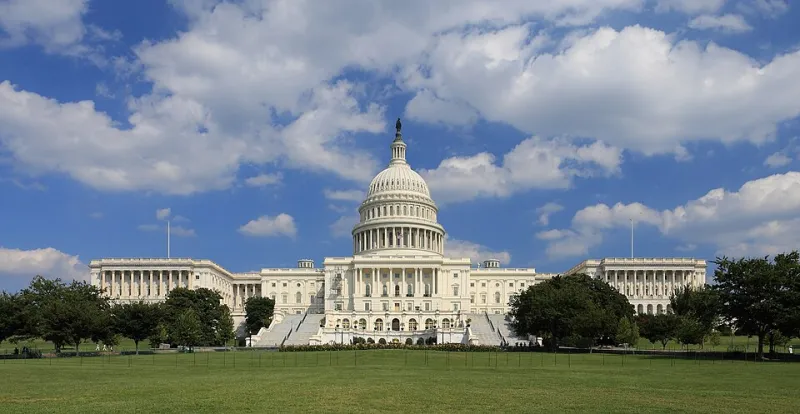
Photo: Martin Falbisoner, CC BY-SA 3.0, via Wikimedia Commons
When Americans picture the line of presidential succession, most can name the Vice President and perhaps the Speaker of the House. Fewer can recite the full order, and fewer still understand how fragile the lower rungs of that ladder have become. The Presidential Succession Act of 1947 places the Cabinet in line beginning with the Secretary of State, but the departments further down the roster — including Education, Veterans Affairs, and Homeland Security — receive dramatically less attention from continuity planners, even though each represents a constitutionally valid path to the presidency.
A Framework Built for the Bipolar Era
The architecture of American succession planning was largely shaped in the 1950s and 1960s, when the dominant scenario was a decapitating nuclear first strike. Federal Continuity Directive 4, along with its predecessors, contemplated a single catastrophic event: one moment in which the leadership of the executive branch might be erased and a designated survivor, sheltered at an undisclosed location, would emerge to assume authority.
That model assumed the threat would be sudden, total, and identifiable. It did not contemplate a cyberattack that disables communications for days, a biosecurity event that incapacitates officials over the course of weeks, or a targeted act of violence that removes several Cabinet members while leaving the government nominally functional. Modern threats tend to be asymmetric, prolonged, and ambiguous — conditions under which the legal question of who is in charge becomes genuinely difficult to answer.
The Logistics of the Designated Survivor
Each State of the Union address, one Cabinet secretary is spirited to a secure, undisclosed location while their colleagues gather in the House chamber. The tradition, popularized by fiction but grounded in real protocol, is among the most visible symbols of continuity planning. Yet former officials involved in these exercises describe a program that is more symbolic than systematic.
The designated survivor is typically selected from mid-tier Cabinet departments, in part because the exercise would be meaningless if the selection fell to an official already high in the line of succession. That means the officials who practice presidential succession are, by definition, those least likely to need it. Meanwhile, the departments lowest in the order — the ones whose secretaries would inherit the presidency only after nearly every other avenue had been exhausted — maintain the leanest continuity staffs and the least frequent engagement with continuity exercises.
One former planner, speaking on background, described the disparity bluntly: "The departments that would matter most in a true worst-case scenario are the ones that rehearse least. Continuity funding flows to operational readiness, not to succession readiness. They are not the same thing."
Gaps in the Order Itself
Beyond logistics, the succession order contains structural vulnerabilities that scholars have flagged for decades. Cabinet positions are occasionally vacant — sometimes for months during transitions — and the statute is silent on how vacancies are handled. An acting secretary's place in the line of succession has been the subject of legal dispute, and the Federal Vacancies Reform Act provides only partial clarity. In a crisis that removed multiple principal officers, the question of whether an interim appointee could constitutionally ascend to the presidency would likely be litigated in real time, at the precise moment the country could least afford it.
There is also the question of eligibility. The Constitution requires that the President be a natural-born citizen, at least thirty-five years old, and a resident for fourteen years. Several Cabinet-level officials in any given administration may fail one or more of these tests, and the government maintains no public accounting of which secretaries are eligible. In a genuine emergency, eligibility screening would occur under duress, if at all.
How Allies Manage the Same Problem
Comparative practice suggests alternatives. The United Kingdom maintains a standing Cabinet Office unit responsible for continuity of government, with succession arrangements reviewed regularly rather than assembled ad hoc. Germany's federal continuity framework designates deputies for every ministerial post as a matter of law, ensuring that each department has a legally unambiguous successor at all times. Israel, operating under persistent security threats, has institutionalized succession planning to a degree that American practice has never matched.
None of these systems is a blueprint for the United States — constitutional structures differ too much for direct transplantation. But they share a principle the American framework lacks: succession is treated as routine administration, reviewed and rehearsed continuously, rather than as an emergency improvisation.
What Reform Would Require
Meaningful improvement need not require constitutional amendment. Congress could amend the Presidential Succession Act to clarify the status of acting officials and vacancies. The executive branch could standardize continuity staffing across all Cabinet departments and require periodic succession exercises for every position in the line, not just the designated survivor at the State of the Union. A classified, regularly updated eligibility review would close the natural-born citizen gap without exposing sensitive personnel information.
The designated survivor tradition endures because it is visible, and visibility breeds the illusion of preparedness. But the truest measure of a republic's resilience is not the ceremony it performs once a year. It is whether the machinery of authority — all the way down to the ninth chair and beyond — would hold if it were ever truly tested. On that measure, the United States still has work to do.