Sixty-Two Minutes at the White House: Reconstructing an Unprecedented Section 4 Invocation
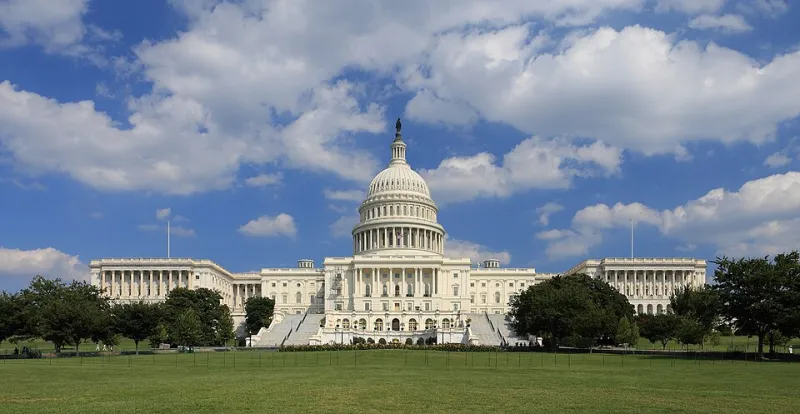
Photo: Martin Falbisoner, CC BY-SA 3.0, via Wikimedia Commons
Since ratification in 1967, the 25th Amendment has been invoked to install vice presidents, to manage surgeries under anesthesia, and to transfer power briefly during presidential colonoscopies. What it has never done — not once in more than five decades — is operate under Section 4, the provision that allows a president to be declared 'unable to discharge the powers and duties of his office' without his consent.
That gap in the historical record is not an accident. Section 4 was drafted for a contingency its authors hoped would never arrive, and its language leaves open questions that could determine the fate of a constitutional crisis. To understand what an invocation would actually look like, it helps to walk through one hypothetically — minute by minute.
The Letter
The process begins with a written declaration. Under Section 4, it is the Vice President acting jointly with 'a majority of either the principal officers of the executive departments' — the Cabinet secretaries — 'or of such other body as Congress may by law provide.' The moment the Vice President and eight Cabinet members sign and transmit that document to the President pro tempore of the Senate and the Speaker of the House, the powers of the presidency shift automatically to the Vice President as Acting President.
Note what does not happen: there is no hearing, no judicial ruling, no deliberative pause. The transfer is instantaneous upon transmittal. In our hypothetical, the letter is delivered to Capitol Hill at 10:14 a.m. on a Tuesday. By 10:15, the White House Situation Room has notified the national security apparatus, and the Acting President is legally empowered to order military action, sign or veto legislation, and direct the executive branch.
The President's Rebuttal
Section 4 then hands the displaced president a powerful tool. If he transmits 'his declaration that no inability exists,' he immediately resumes his powers — unless the Vice President and the Cabinet majority send a second declaration within four days reasserting their position. This back-and-forth is where the amendment's drafters built in friction deliberately: they wanted a cooling-off period before Congress intervened.
Constitutional scholars have long noted the strangeness of this design. The presidency could theoretically change hands twice in four days, with a single signature deciding whether the nation's commander in chief controls the nuclear codes at any given hour. In practice, the second Cabinet declaration would likely follow within hours, not days — the officers who signed the first letter would rarely reverse course unless genuinely persuaded the president had recovered.
Congress Weighs In
If the second declaration is transmitted, Congress must decide. Both chambers need a two-thirds vote to sustain the finding of inability. If either chamber falls short — and the vote must conclude within 21 days of the second declaration, excluding weekends — the president retains power. Period. The amendment provides no appeal, no further mechanism, no role for the courts.
Consider the political math. Two-thirds of both houses means roughly 290 votes in the House and 67 in the Senate. A president's own party would have to abandon him at scale. Historical near-misses suggest how difficult that threshold is: after President Garfield lingered incapacitated for months in 1881, and again during Woodrow Wilson's 1919 stroke, Congress took no formal action at all, largely because no constitutional mechanism existed. Even with a mechanism, the partisan gravity of a modern Congress makes a two-thirds supermajority an extraordinarily high bar — arguably the single most important safeguard in the entire design, and the most likely point of failure for any genuine invocation.
The Ambiguities That Could Fracture the Process
Three unresolved questions shadow any real-world test.
First, who counts as the Cabinet? Section 4 references 'principal officers of the executive departments,' but presidents have sometimes placed acting secretaries in those seats. Whether an acting official can help depose the president who appointed him remains legally unsettled — and a determined White House counsel would raise it within minutes.
Second, what does 'unable to discharge' mean? The amendment's drafters deliberately declined to define inability, wary of inviting medical or political tests. Section 4 was conceived with physical incapacity in mind, but scholars — and, in 2021, a bipartisan group of former officials testifying before Congress — have debated whether it could reach a president whose unfitness is behavioral rather than physiological. Nothing in the text forecloses either reading.
Third, can the president fire the Cabinet mid-crisis? A displaced president, watching secretaries sign the letter, might attempt to dismiss and replace them before the four-day window closes. The amendment is silent on whether a president stripped of his powers can still exercise the appointment and removal authority of the office he no longer holds. Most scholars say no; no court has ever said anything at all.
Why the Simulation Matters
Continuity planning is often framed around succession — who moves up when a seat empties. Section 4 addresses a harder problem: what happens when the seat is occupied by someone who cannot, or should not, exercise its powers. The amendment's authors, led by Senator Birch Bayh, understood that a contested incapacity could not be solved by a line of succession alone. They built a process that forces elected representatives, not physicians or judges, to make the final call.
That choice reflects a constitutional philosophy: democratic endurance depends not on eliminating every ambiguity, but on ensuring that the institutions closest to the people resolve the ones that remain. A Section 4 invocation would be chaotic, contested, and televised. It would also be the system working — slowly, awkwardly, and in the open — rather than failing.
The best evidence that the mechanism can hold is that it has never had to. The second-best evidence is that its authors, anticipating the worst, gave Congress the final word.