Two Decades of Strain: What September 11 and January 6 Revealed About the Machinery of Succession
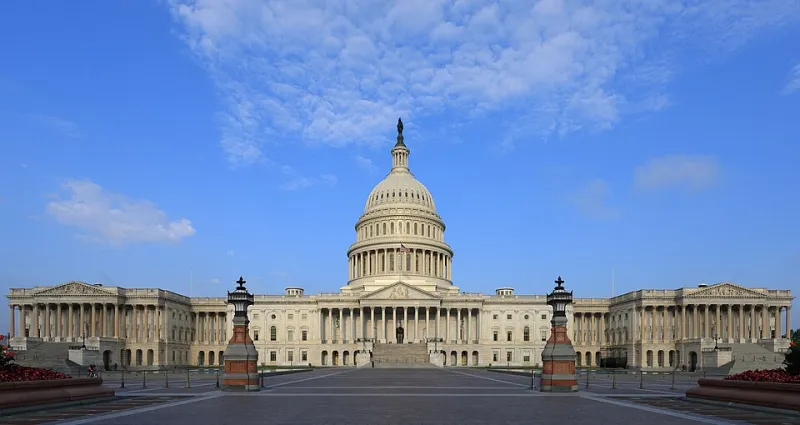
Photo: Martin Falbisoner, CC BY-SA 3.0, via Wikimedia Commons
Constitutions are tested not in calm moments but in crises, when the ordinary machinery of government must absorb extraordinary shocks. For the United States, the twenty-first century has supplied two such shocks of singular importance: the terrorist attacks of September 11, 2001, and the breach of the U.S. Capitol on January 6, 2021. Both events struck at the physical continuity of American governance, and both revealed a great deal about which safeguards hold under pressure and which remain unfinished business.
The Shadow Government of 2001
When hijacked aircraft struck the World Trade Center and the Pentagon, the immediate concern was decapitation: could the executive branch keep functioning if its leadership were killed? In the days that followed, the Bush administration quietly activated contingency arrangements sometimes described as a "shadow government." Roughly 100 senior civilian officials were rotated through hardened bunkers at off-site locations under a program known as COG, or continuity of government, ensuring that a constitutional successor could reconstitute federal authority even in a worst-case scenario.
The arrangements worked in a narrow, technical sense. There was no question about who held presidential authority; Vice President Cheney's movements to secure locations, and later President Bush's careful separation from the Vice President in public appearances, reflected a deliberate effort to preserve the line of succession against a decapitation strike. Congress, too, reconvened within days despite the anthrax attacks that followed.
Yet 9/11 also exposed gaps that planners had long warned about. The Presidential Succession Act of 1947 placed the Speaker of the House and the President pro tempore of the Senate — elected officials, not always executive-branch veterans — directly behind the Vice President. Critics across several administrations noted that these officials might be unfamiliar with national security machinery, or that the line could be thinned by a single catastrophic event. Proposals to insert cabinet officers or regional federal officials higher in the order of succession surfaced repeatedly after 2001, but Congress has never restructured the statute in a fundamental way.
January 6: A Different Kind of Threat
Twenty years later, the threat inverted. Rather than enemies abroad targeting the government from the outside, the certification of the 2020 election — the constitutionally mandated joint session presided over by the Vice President — came under assault by a domestic mob. For several hours on January 6, 2021, the constitutional function of counting electoral votes was physically interrupted, and the Vice President, the Speaker, and much of the congressional leadership were evacuated or sheltered.
The episode demonstrated both resilience and fragility. The certification resumed that same evening, an act of institutional endurance that deserves recognition. But the crisis also underscored how much of the process depended on informal norms rather than hardened procedure. No statute clearly governed what would happen if a Vice President refused to preside, if the Speaker were incapacitated during a joint session, or if certification could not be completed before the twentieth of January. Security planning for the electoral count — an event that had long been treated as ceremonial — was inadequate to a foreseeable scenario.
What Worked, and What Did Not
A candid ledger from the two decades would look something like this. The successes: executive continuity arrangements proved deployable; the military chain of command held in both crises; and Congress demonstrated the capacity to reconvene and complete its constitutional duties under duress. The failures: the statutory line of succession remains vulnerable to simultaneous incapacitation of multiple officials; the Electoral Count Act of 1887, until its 2022 amendments, contained ambiguities that nearly invited exploitation; and physical protection of the electoral certification was, before January 6, grossly mismatched to the risk.
The Electoral Count Reform and Presidential Transition Improvement Act, signed in late 2022, addressed some of the statutory ambiguity by clarifying the Vice President's purely ministerial role and raising the threshold for objections. It represents the most significant continuity reform in generations. But structural questions about the succession line — including the wisdom of placing partisan elected officials in the immediate line, and the absence of clear procedures for congressional incapacity — remain unresolved.
An Unfinished Agenda
Scholars and former officials continue to press for reforms: a reconstituted succession statute that balances legitimacy with experience; statutory continuity procedures for Congress modeled on executive COG planning; and routine, publicly accountable security reviews for constitutionally mandated gatherings. None of these measures is glamorous, and none generates political reward for its sponsors. That is precisely why continuity planning tends to advance only in the aftermath of failure.
The lesson of the fifty-year stress test is not that American institutions are brittle — they proved remarkably durable — but that durability is not an accident. It is built in advance, in statute and in habit, by officials willing to prepare for crises that may never arrive. The next test will not announce itself in advance. The question is whether the reforms of the last two decades will be the last word, or merely the next installment in an ongoing project of democratic self-protection.